
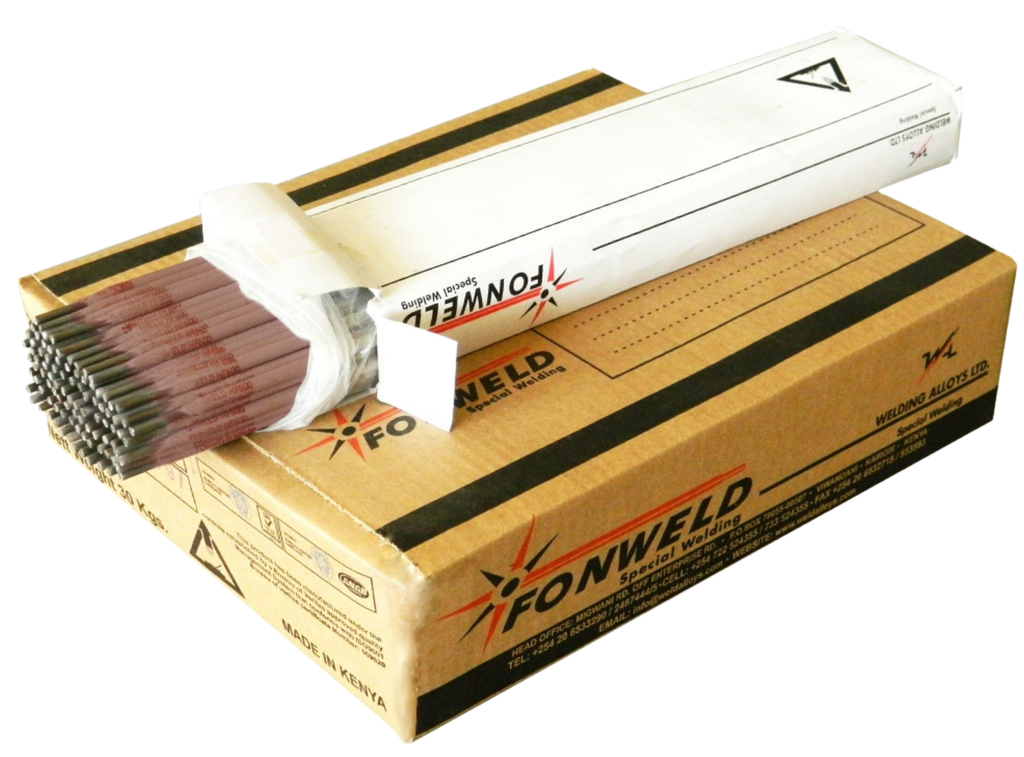
WELDING RODS FONWELD E901 5MM
WELDING RODS FONWELD E901 CUTTING RODS 5.0MM
Product Description
WELDING RODS FONWELD E901 CUTTING RODS 5.0MM (PRICE PER KG) are special-purpose cutting electrodes designed for cutting and piercing a wide range of industrial metals without the use of oxygen or compressed air. FONWELD E901 features a special coating that maintains a stable arc during cutting operations, producing clean cut surfaces and relatively narrow kerf widths.
Key Benefits and Features
- FONWELD E901 special-purpose cutting electrode.
- 5.0mm diameter for efficient cutting and piercing applications.
- Designed for cutting steel, cast iron, copper alloys, and aluminium.
- Also suitable for cutting stainless steel and stainless-steel-clad plates.
- Operates without the need for injected oxygen or compressed air.
- Special coating provides a stable arc during cutting and piercing.
- Produces clean cut surfaces.
- Helps achieve small kerf widths for controlled material removal.
- Suitable for industrial maintenance, fabrication, and repair work.
- Recommended 5.0 × 450mm electrode current: approximately 290A.
- Suitable for DCEP / AC current modes.
- Sold on a price-per-KG basis.
Essential Specifications
- Product Type: Cutting Electrode
- Brand: FONWELD
- Grade: E901
- Diameter: 5.0mm
- Standard Electrode Length: 450mm
- Recommended Current: Approximately 290A
- Current Mode: DCEP / AC
- Primary Function: Cutting and piercing
- Suitable Materials: Steel, cast iron, copper alloys, aluminium, stainless steel, and stainless-steel-clad plates
- Selling Basis: Price Per KG
Typical Applications
- Cutting steel components
- Cutting and piercing cast iron
- Cutting aluminium and copper alloys
- Cutting stainless steel
- Cutting stainless-steel-clad plates
- Industrial metal fabrication
- Removal of unwanted metal sections
- Maintenance and repair work
- On-site cutting and piercing operations
- General workshop and industrial applications
FONWELD E901 5.0mm is an effective choice for industrial cutting and piercing where stable arc performance, clean cut surfaces, narrow kerf widths, and oxygen-free operation are required.